- Rock Chasing
- Posts
- 💎 A tile floor in the middle of the forest!
💎 A tile floor in the middle of the forest!
Hello rockhound,
It's that time again—time to explore, discover, and celebrate the fascinating world of rocks and minerals!
We’ve had a lot of rain here in Texas and that has made for some excellent rockhounding (the next day). I’ve also come across some really interesting photos and other info that I can’t wait to share!
This week we cover
A tile floor in the middle of a forest
A 136-pound find from a Rock Chasing member
Some stunning Ethiopian opals
My best tips for finding a lot of agates this year
Differentiating between topaz and aquamarine
Much more!
Happy rockhounding!
Keith
A little sparkle to start
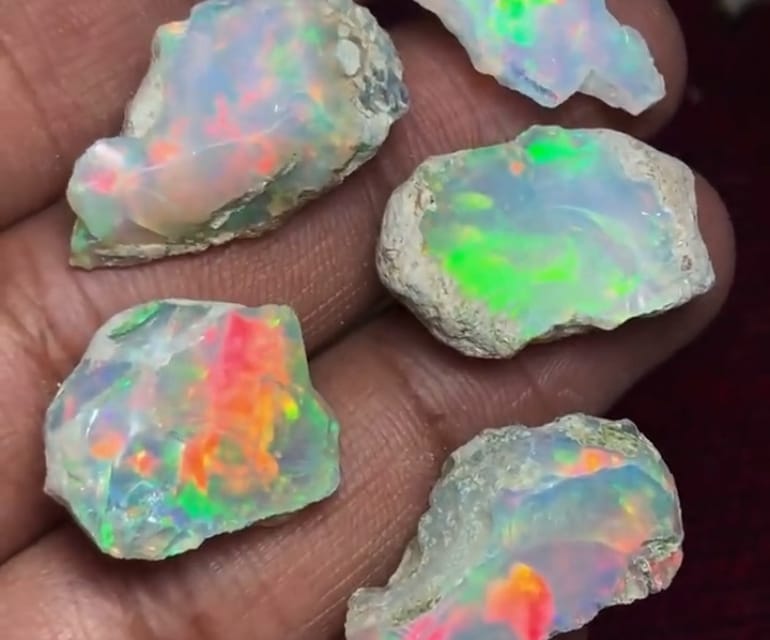
Ethiopian Opals - Photo Credit: InfinityOpal
I have to admit, I’m a bit of an opal fiend! Look at those incredible colors! I’ve spent countless hours watching opal mining and cutting videos on YouTube…
Found primarily in Ethiopia's volcanic rock formations, these opals have a beautiful range of colors—from neon greens and bright yellows to deep reds. As you move them back and forth you practically get a fireworks display of color!
What makes them particularly interesting is their "hydrophane" property, which allows them to absorb water and change appearance temporarily.
You can find out more about this find or add it to your collection here.
A Quick Recommendation
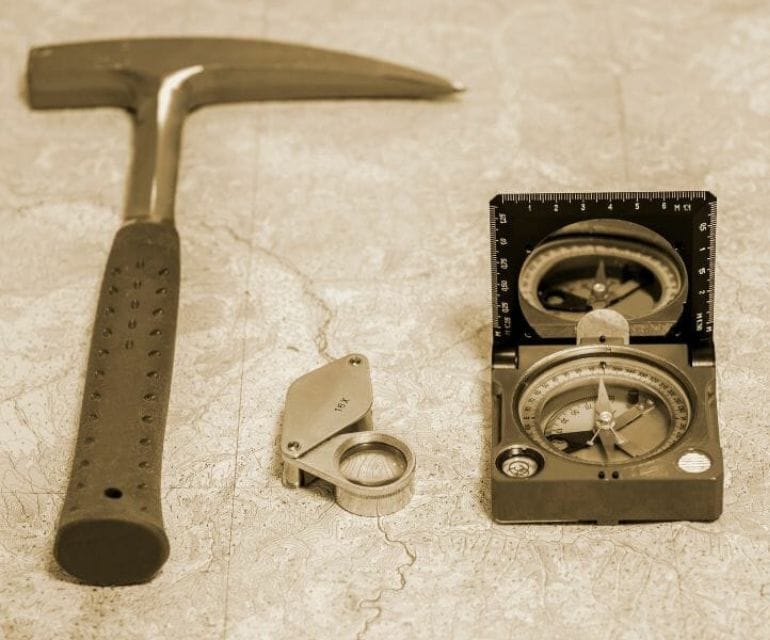
Now that the weather is getting better it’s time to get back out there and start finding some beautiful rocks and minerals!
As always, I wanted to share the current gear I’m using and what I really like.
If you need to replace some worn out gear or are just starting out check out my gear recommendations here.
These are all tools and gear that I personally own and use. Not just some random items! I tend to go for gear that lasts a long time and isn’t too expensive.
Other people won’t understand….

I think everyone in my family can relate to this picture…
I bet your family can relate to this as well :)
Find of the week

Barite Rose
A 136-pound find with Ptygmatic Folds!
This gigantic beauty was found by Rich on his property in Northern Wisconsin. He carried this monster for half a mile to bring it home.
That’s some major commitment!
While we don’t have a 100% positive ID on his find, it appears to be a large piece of granite with some beautiful Ptygmatic Folds, possibly containing iron.
Ptygmatic folds are special types of folds in rocks with twisted patterns like this. They happen when very thick materials in the earth are squeezed under intense, localized pressure, causing the materials to fold in complex, messy ways.
They are not very common and they help scientists understand how extreme forces can change the Earth's crust, giving us clues about the earth's past.

Send me photos of your rocks and minerals!
I want to see what you’re finding and adding to your collection! Send me photos of the rocks and minerals that you’re discovering in your rockhounding journey or bought and added to your collection so I can share it with the community.
Send your best photos and descriptions to [email protected] or just reply to this email!
Geology Highlights

Every rockhound likes agates. If you don’t I want to know why!
They are some of the most beautiful and varied types of rock that you can find and there are so many ways you can use them.
In this article, we’ll explore the geology of agate formation and where to find them. We’ll also provide tips and techniques for identifying agates and the tools you’ll need to start your own agate collection.
There are a LOT of places where you can find agates if you know where to look.
**If I missed any good spots or you have some of your own agate hunting tips reply to this email so I can share them with the rest of the community**

Community Tips
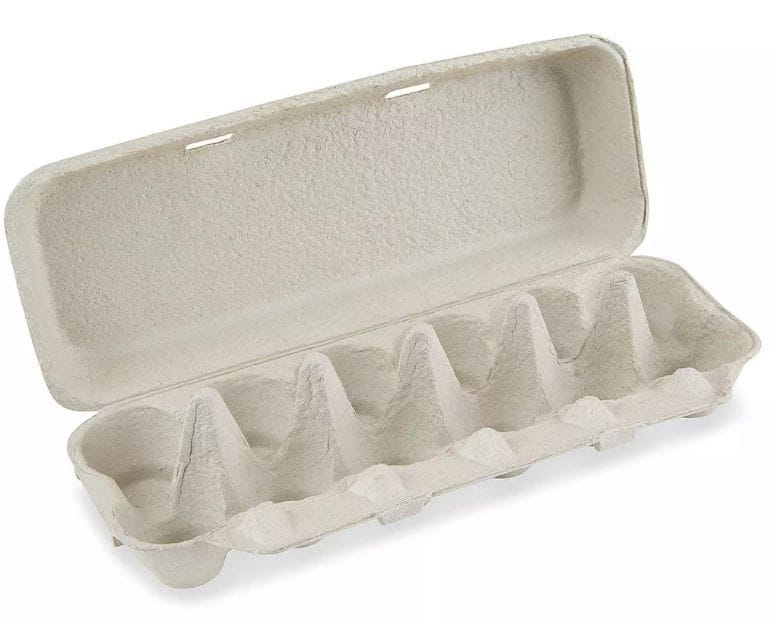
Save your egg cartons!
This week’s tip comes from Ginger in Tucson Arizona::
The barite roses found near Stanley Draper Lake are typically smaller than the ones you can find by Lake Thunderbird, but the quality of them is much much better.
Egg cartons are fantastic for keeping the rocks and minerals you find safe when you’re bringing them home or storing them.
For a long time, I would constantly have one or two of my more delicate finds break as I traveled home. When you have a bunch of hard rocks together things tend to break.
I was out camping on a trip and after we ran out of eggs I decided to take the carton with and give it a try. It worked great!
Once I got home I could also just put the carton on the shelf without worrying about anything breaking.
Ginger
Every week one of our members shares a valuable tip or a big mistake they've made in their rockhounding journey. If you have a tip or mistake you'd like to share email us at [email protected] or just reply to this email!
Geology highlights

Fire obsidian - Photo credit: Energy That Wraps You
Aside from being known for its shiny, glass-like appearance, did you know that obsidian can be found in all sorts of colors and patterns, too? In fact, some of its types are super rare and can cost a pretty penny.
While the regular black obsidian you find in many parts of the country is beautiful, some of these are just breathtaking!
Rockhounding
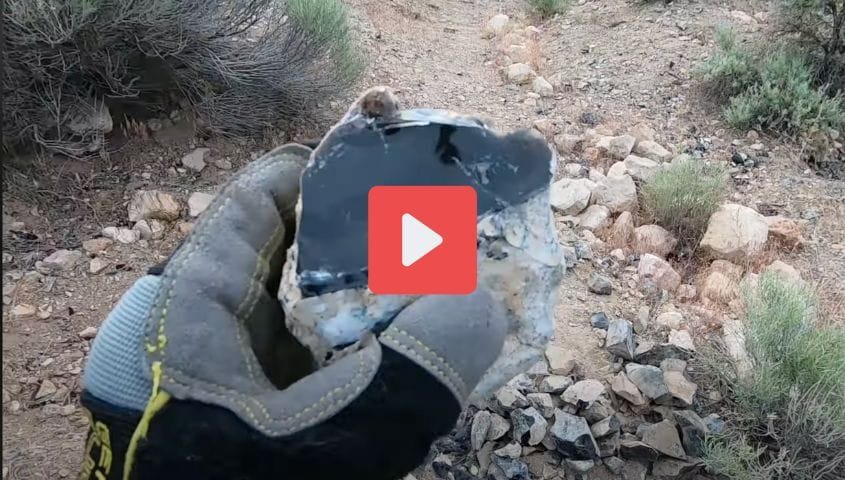
This is a great video from Currently Rockhounding covering a recent trip of his to Glass Butte in Oregon.
This is a really enjoyable video where he shares a lot of great info on how to find obsidian and what to look out for.
Geology Highlights

Devil's Postpile National Park
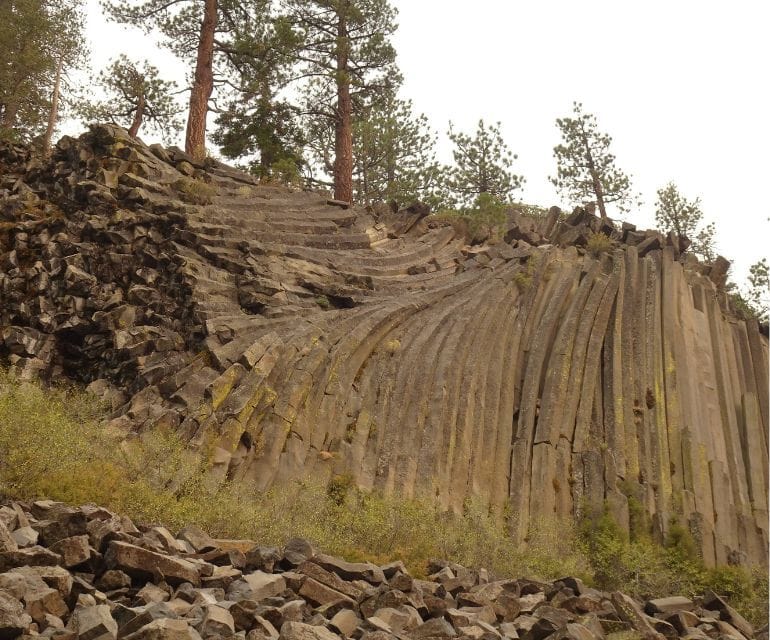
Is that a tile floor in the middle of a forest???
What looks like a man-made tile floor is actually an incredible geological formation of glacially polished columnar jointing at Devil's Postpile National Park in Mammoth Lakes California.
These basalt columns formed about 100,000 years ago when lava flowed into this area and cooled very slowly, creating a solid rock. As it cooled, the rock contracted and cracked into mostly hexagonal columns.
It’s a really unique and beautiful formation. To get a better perspective, here is another photo from a different angle:
Geology highlights

Dematnoid Garnet - Photo credit: Weinrich Minerals
Demantoid Garnet like this is a rare and highly prized for its vibrant green color and brilliant sparkle, which is even brighter than diamonds!
What makes demantoid garnet especially unique is its "horsetail" inclusions, which are fine, hair-like strands of mineral inside the gem that look like the tail of a horse. These inclusions are not found in any other type of gemstone and add to the stone's rarity and value.
Mined primarily in Russia, and more recently in Namibia and Madagascar, demantoid garnet is a favorite among gem collectors and jewelry enthusiasts for its distinct beauty and rarity.

Geology Highlights

Aquamarine on Feldspar - Photo Credit: Mineral Masterpiece
Two of the most fascinating gems we often hear about are topaz and aquamarine. They’re both stunning in their own right, but when you start comparing them, it’s like uncovering a whole new layer of their beauty.
The differences between topaz and aquamarine are not just about color or sparkle. It’s like meeting two people with distinct personalities— both interesting, but in their own special ways.