- Rock Chasing
- Posts
- 7/8/24 Post
7/8/24 Post
In partnership with

Hello rockhound,
We’ve got some incredible photos and great info for you this week. Come hang out with your fellow rockhounds!
This week we cover
Rhodochrosite so beautiful you could eat it
My struggle with museum gift shops
The beach combing finds we all want
How to find and identify jasper
Much more!
Happy rockhounding!
The Rock Chasing Crew
A little sparkle to start
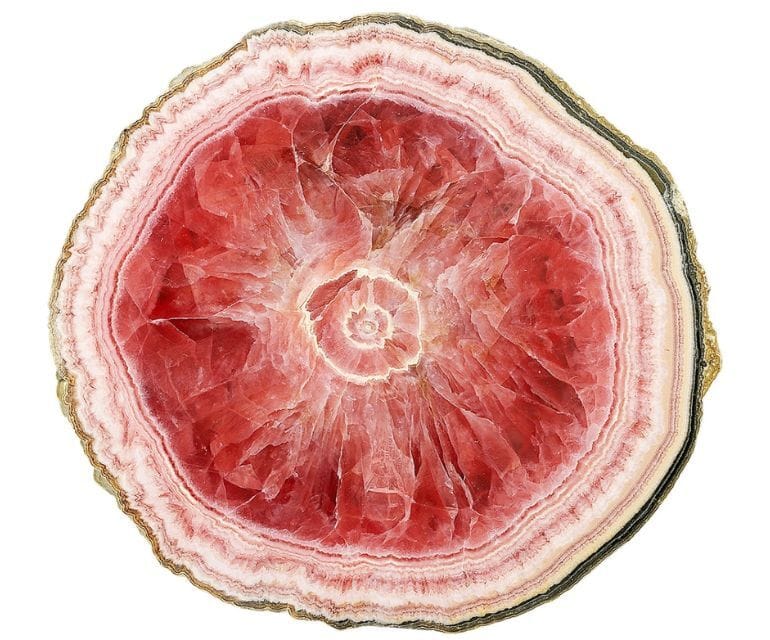
It looks a LOT like a blood orange slice…
This is an incredible Rhodochrosite from the Capillitas Mines in Argentina, known for its vibrant pink and red colors. These slabs often show beautiful banding and can be quite translucent.
Some pieces reveal rare, star-like patterns that look almost floral. These unique features make Capillitas rhodochrosite a favorite for gem cutters.
Rhodochrosite is composed mostly of manganese carbonate. It forms in places where hot, manganese-rich water flows through cracks in rocks, depositing the mineral.
You can often find it near silver, lead, and copper ores and it often has white streaks or bands mixed in.

We scour 100+ sources daily
Read by CEOs, scientists, business owners and more
3.5 million subscribers
Other people won’t understand….

Find of the week
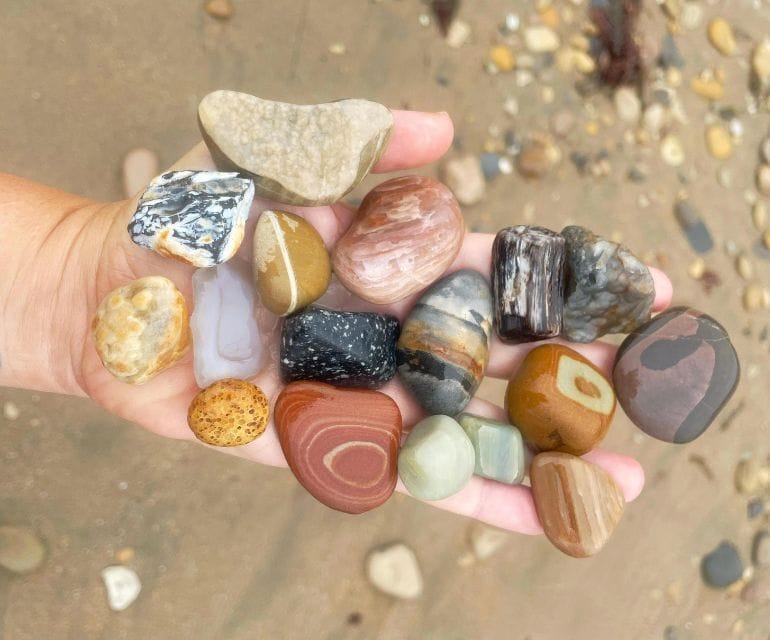
This is your reminder not to forget about beachcombing! These beauties were all found by a fellow rockhound along the coast of the Gulf of Mexico just south of Louisiana.
Such a beautiful collection of agates!
You might be thinking to yourself that they look a bit too polished to be found that way. One of the coolest things about beachcombing is that many of the rocks and minerals you find will have already been “tumbled” and polished naturally by the waves and the sand.
It sure saves a lot of time and leads to some really great looking finds.
Send me photos of your rocks and minerals!
I want to see what you’re finding and adding to your collection! Send me photos of the rocks and minerals that you’re discovering in your rockhounding journey or bought and added to your collection so I can share it with the community.
Send your best photos and descriptions to [email protected] or just reply to this email!
Geology Highlights

In honor of the beach finds we shared above I wanted to share our article about the more interesting crystals you can find on many beaches.
There are some absolutely beautiful crystals out there just playing in the waves!

Earth Enigmas
Each week we ask a fun trivia question here. We’ll share the answers and the community responses for everyone to read next week. Show off your rockhounding chops!
Last week we asked “Where was the largest diamond ever found in the United States?” and here is how you answered:

Overall, you guys did a great job! The largest diamond ever found in the United States is the "Uncle Sam" diamond. It was discovered in 1924 at the Crater of Diamonds State Park in Murfreesboro, Arkansas. The diamond weighed 40.23 carats in its rough form and was later cut into a 12.42-carat emerald-shaped gem.
Here is this week’s question:
Which of the following gems is known for changing color under different lighting conditions? |
Community Tips
Creek crawling is a great way to get kids interested in rockhounding
This week’s tip comes from Ann who has been doing the good work of infecting her young nieces and nephews with her love of rocks and minerals. Her nieces and nephews always love looking at her collection and she got them hooked by scouring the local creeks for new finds.
Creek crawling combines the fun of swimming in the creek and playing around in the water with our passion for hunting beautiful rocks and minerals. Kids can get a bit bored if they're just looking for rocks but combining that with the fun of a creek is a perfect activity.
Great idea Ann!
Every week one of our members shares a valuable tip or a big mistake they've made in their rockhounding journey. If you have a tip or mistake you'd like to share email us at [email protected] or just reply to this email!
Geology highlights

Iguaçu Falls, straddling the border between Argentina and Brazil, form the world's largest waterfall system. The falls divide the Iguazu River into upper and lower sections. The river originates near Curitiba, flowing through Brazil, with most of the falls located on the Argentine side.
The falls feature two main steps made of basalt, standing around 115 and 131 feet high.
The Devil's Throat Canyon, a highlight of the falls, is around 262 to 295 feet wide and 229 to 262 feet deep. Nearby, another part of the river creates up to 200 individual falls during flood stages.
Rockhounding
Look at that incredible fossil ammonite! What a dream find!
Fossil ammonites are ancient sea creatures related to modern squid and octopuses, with coiled, spiral shells. They lived millions of years ago, and when they died, their shells were buried in sediment.
Over time, the sediment turned into rock, preserving the ammonite shells as fossils. Some ammonites have a stunning rainbow coloring, known as ammolite.
This happens because the shell's original aragonite layers reflect light in different colors. Minerals like iron, magnesium, and silica also seep into the shell over millions of years, enhancing the iridescent effect.
Geology Highlights

Lander Blue Turquoise
The 24 Types Of Turquoise (With Photos)
Turquoise is a favorite of mine and I know a lot of you like it as well. did you know there are over 20 different types of Turquoise that you can find???
We’re going to cover them and show you some incredible photos.
Geology highlights

The Subway in Zion National Park is a distinctive slot canyon within the Zion Wilderness, named for its tube-like shape. Located between North and South Guardian Angel peaks, this canyon is part of the larger Great West Canyon.
The Left Fork North Creek flows through The Subway, creating its unique geological features. Access to this area is limited and requires a permit due to its delicate ecosystem and popularity.

Geology highlights
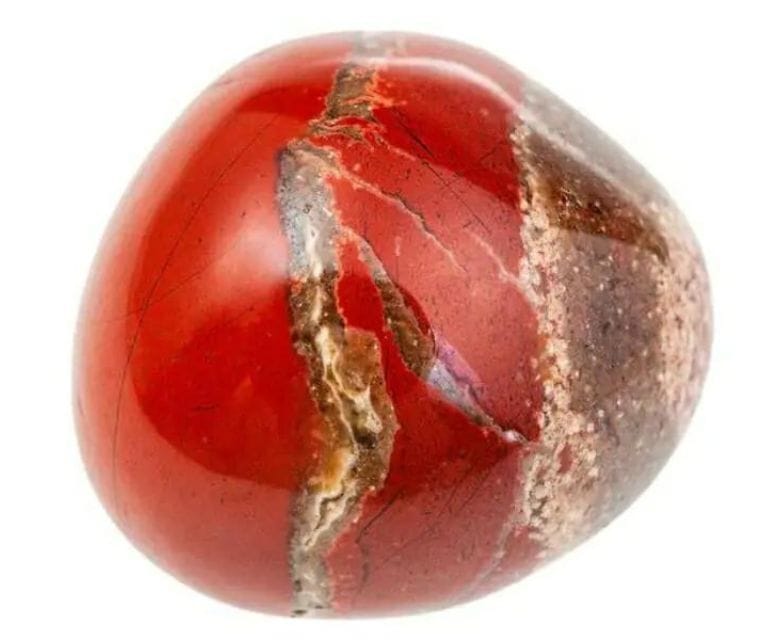
Jasper is one of the rocks that you can find in a lot of places but can look like a lot of different things. It can make it tough to identify without a bit of knowledge.
Here is how you can do it!