- Rock Chasing
- Posts
- 8/30/24
8/30/24

Adam Sanders
August 29, 2024
In partnership with

Hello rockhound,
We’ve got some incredible photos and great info for you this week. Come hang out with your fellow rockhounds!
This week we cover
When "fools gold" is still worth a pretty penny
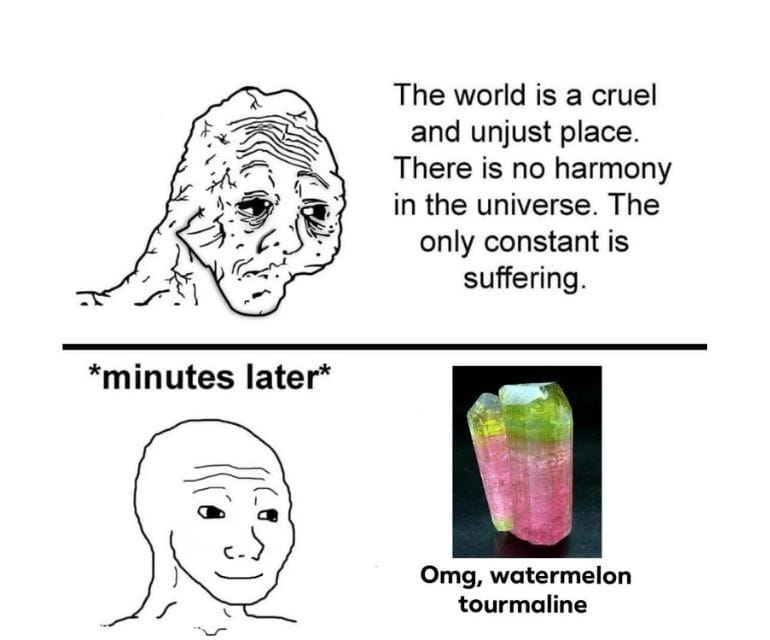
Watermelon tourmaline is kind of a lifesaver
How you guys continue to “shock” me
Some beautiful quartz and geode finds
The joy of cutting agates
Much more!
Happy rockhounding!
Keith
For Those Who Seek Unbiased News.

Be informed with 1440! Join 3.5 million readers who enjoy our daily, factual news updates. We compile insights from over 100 sources, offering a comprehensive look at politics, global events, business, and culture in just 5 minutes. Free from bias and political spin, get your news straight.
A little sparkle to start

Photo Credits: Saphira Minerals
Pyrite, commonly known as "fool's gold," is an iron sulfide mineral with a metallic luster and pale brass-yellow hue 🌟. It’s often mistaken for gold due to its color.
Unlike gold, however, pyrite is brittle and breaks with uneven fractures. Pyrite crystals are also often cubic or multifaceted, with sharp, well-developed faces that make them easy to identify.
Gold, on the other hand, is malleable and does not break like pyrite. While gold leaves a yellow streak, pyrite leaves a greenish-black streak.
Other people won’t understand….
A Quick Recommendation
If you’re looking for new outdoor activities or want to keep up with what’s going on checking out ISportsmanUSA is worth a shot.
It’s a great way to get a lot of interesting info for outdoor fanatics like us!

Find of the week

This week we have a beautiful collection of various crystals from fellow rockhound Tammie in Mississippi. What a great collection!
Tammie tells us that she found these beauties in Mississippi. Such a great variety of quartz, geodes, and other finds that would be the prize of many collections.
Thanks for sharing Tammie!
Send me photos of your rocks and minerals!
I want to see what you’re finding and adding to your collection! Send me photos of the rocks and minerals that you’re discovering in your rockhounding journey or bought and added to your collection so I can share it with the community.
Send your best photos and descriptions to [email protected] or just reply to this email!
Geology Highlights
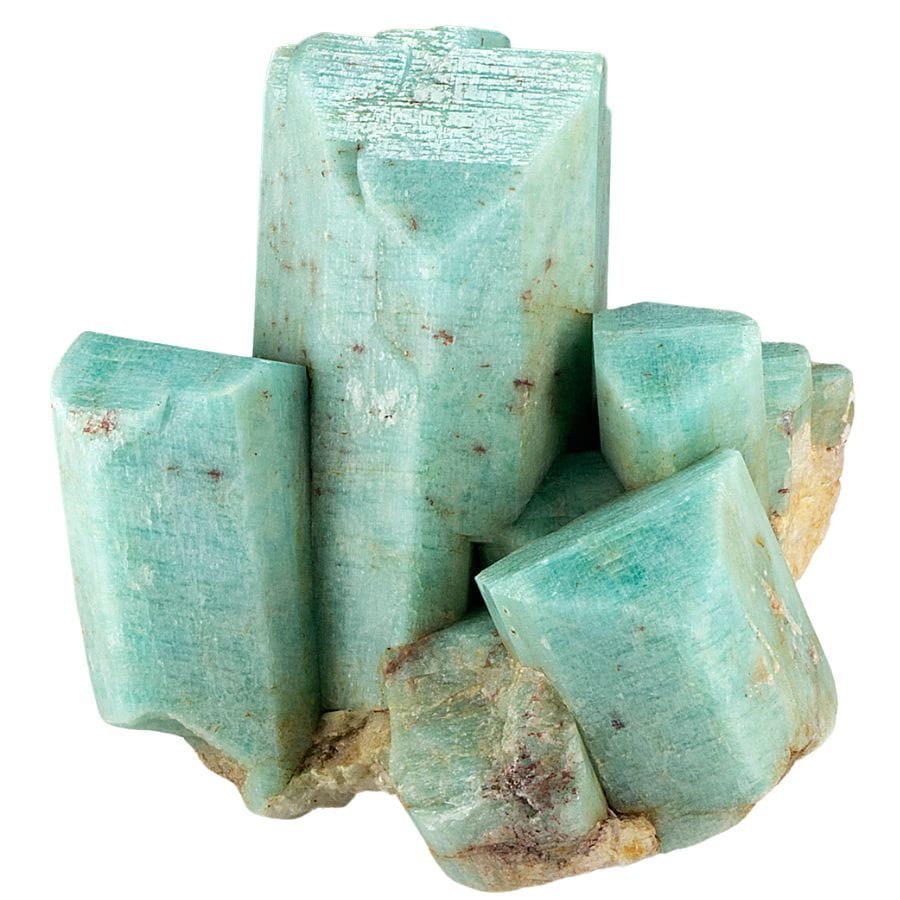
Blue rocks, minerals, and gems have captivated people’s imaginations for generations, from precious stones like sapphires and blue topaz to more common blue minerals like azurite and sodalite.
These minerals have been used in a variety of ways throughout history. For example, ancient azurite was used as a pigment in paint and dyes. Sapphire, meanwhile, is one of the most sought-after stones today.
Check out the most beautiful and interesting blue rocks, minerals, and crystals on earth!
Earth Enigmas
Each week we ask a fun trivia question here. We’ll share the answers and the community responses for everyone to read next week. Show off your rockhounding chops!
Last week we asked you “ Which rock or mineral produces electrical energy when rubbed, squeezed, or heated (pyroelectric)?”
Once again, many of you nailed it! In fact, this one was a bit easier than most weeks since BOTH Schorl AND Quartz are Pyroelectric!

This week’s question is a bit trickier!
Which of the following rocks or minerals can be scratched by an iron nail? |
Geology highlights

Photo Credits: Nate Luebbe
Goblin Valley State Park in Utah🌄 is renowned for its thousands of hoodoos—tall, thin spires of rock that create a surreal landscape. The hoodoos in this park, referred to locally as "goblins," vary in shape and size, often resembling towers, pillars, or even strange creatures due to the way they've been sculpted by erosion.
The hoodoos in Goblin Valley are specifically formed from Entrada sandstone, a mix of sandstone, siltstone, and shale. Erosion-resistant layers sit atop softer rock, and over time, wind and water have worn away the softer material, leaving the harder rock formations standing.
The goblins' distinct appearance is a result of joint patterns within the sandstone, which create zones of weakness that erode faster, giving the hoodoos their characteristic shapes.
Rockhounding
Every time you cut open an agate it feels like you’re opening a present. Only sometimes the box is empty 🥲
Geology Highlights

Looking for crystals can be an exciting adventure. But just like any adventure, there are right ways to go about it. Many folks jump in without knowing the common slip-ups that can make their crystal search less fruitful or even a bit risky.
Even seasoned rockhounds miss a step along the way, so we’ll remind you of the common mistakes you should avoid when looking for crystals in the great outdoors. From preparing for your trip to respecting the environment, we’ve got you covered!
Geology highlights
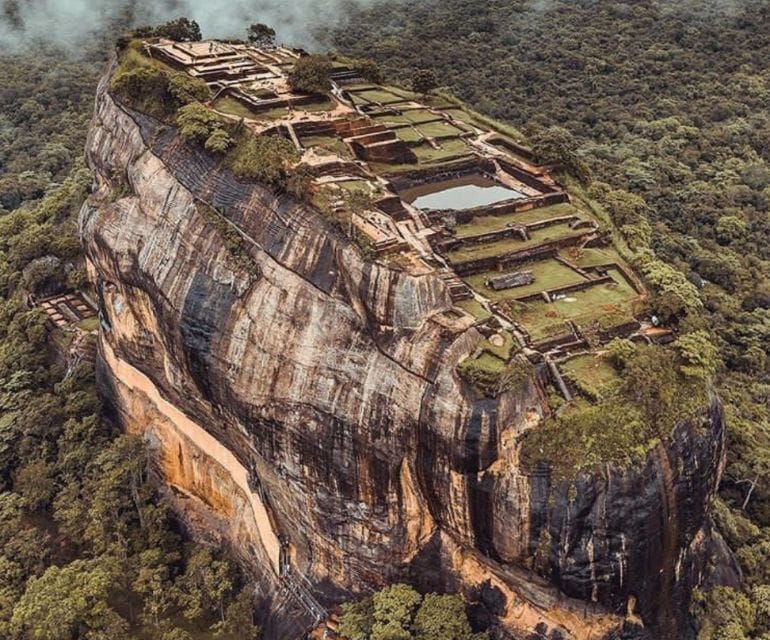
Sigiriya, also known as Lion Rock, is an ancient fortress in Sri Lanka, perched on a 590-foot granite column. Built by King Kashyapa in the 5th century, this historical site features palace ruins, colorful frescoes, and an impressive gateway shaped like a lion 🦁.
Over time, erosion exposed the hard granite core, leaving behind the steep, flat-topped rock that made an ideal site for the king's fortified palace.

Geology highlights
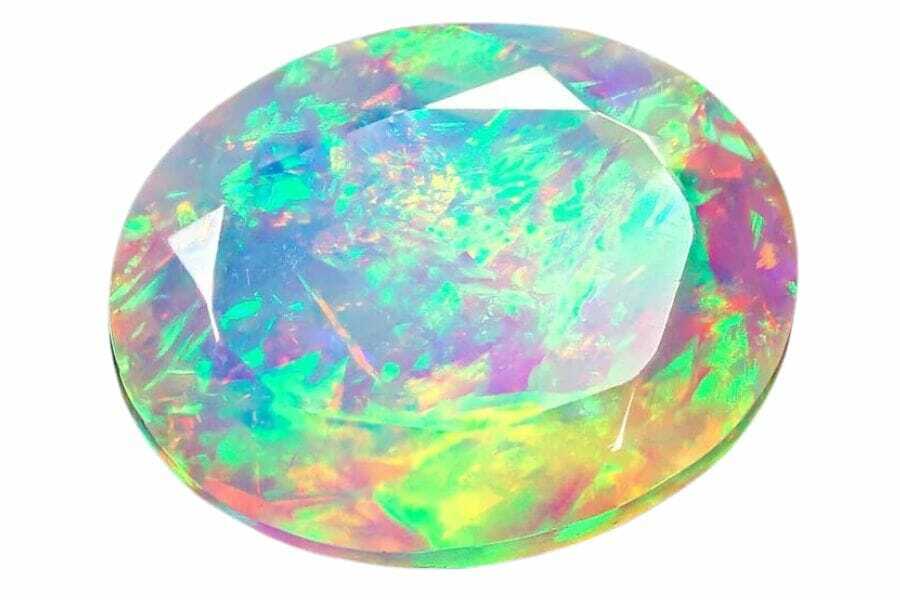
Photo credit: HouseofGEMsCreations
At first glance, opal and opalite might seem like twins. In reality, they’re more like distant cousins. Even so, comparing opal vs opalite can be both intriguing and a tad confusing.
Opal, with its natural play-of-color, has been a gem enthusiast’s delight for ages. Its brilliant flashes and dance of hues have made it a favorite in jewelry and collection circles.